
Health news they don't want you to know
Health news they don't want you to know
Health news they don't want you to know
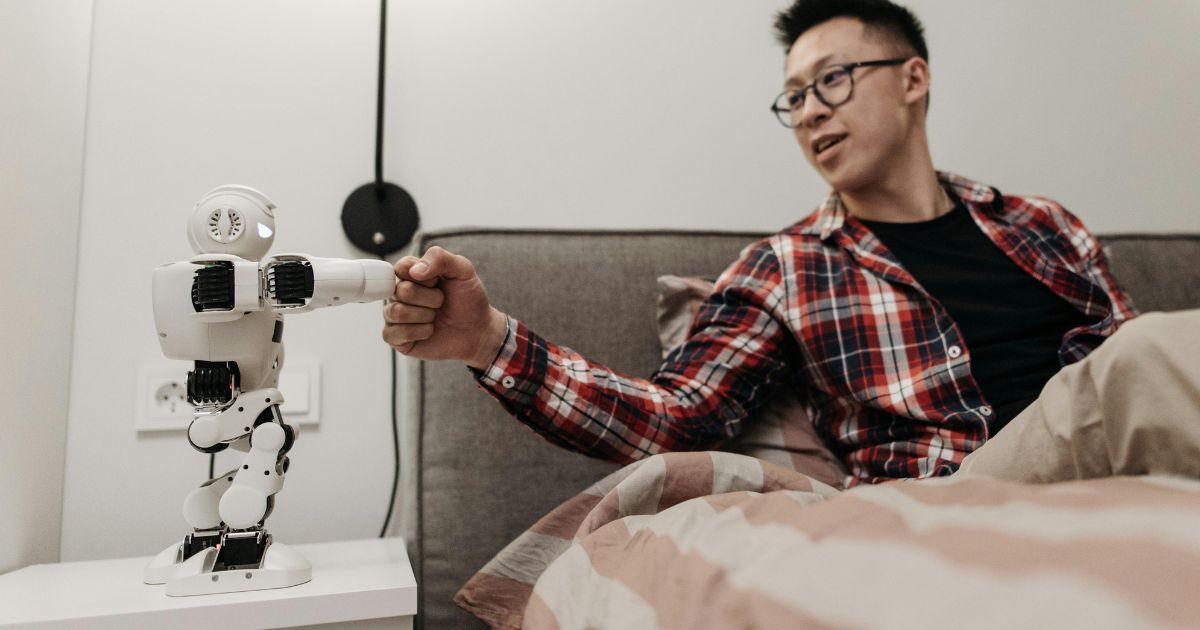
Taiwan: Growing our friendship circle may help us navigate life’s persistent setbacks and everyday traumas – but scientists suggest that cutting this circle in half to form a semi-circle and halving them again and again to form indeterminate smaller shapes could considerably boost our wellbeing.
“There’s a reason why we come into this world alone and not with a bunch of other people,” said Dr Denise Chang at UBTECH Robotics in Shenzhen. “Being on our own is completely natural – it’s why a baby penguin eats its mother typically within a week of it being born.”
Tests by the tech firm show the considerable mental health benefits when people are left well alone, with many respondents giving a score of 3/10 compared to 2/10 when asked how they feel – almost twice as good.
“Looking at social media feeds of colleagues by yourself or shadowing celebrities online is incredibly empowering. It’s why we recommend reducing your friendship circle to two people max, or even one if possible – and then just to have a backup if you need a lift to the hospital or help with a gambling debt.”
In this era of polarised opinions and VAR, going it alone also gives us more agency, said Dr Chang, employing a commonly used term by secret service blackhats.
“Apart from mass shootings, individuals generally make better decisions. Although many mass shooters are influenced by their online friend circle who encourage them. These tragedies don’t occur if your only friend is a robot companion – the only encouragement they offer is to clean up if you get too excited and to occasionally change their oil.”

United Arab Emirates: Medical researchers at cluster bomb revivalist BAE Systems have found that extending wars could help men feel better about their mental health – and curiously, work wonders for Western population growth.
“When civilian males pick a side in a televised battle, whether it is a hateful Iranian regime or a despicable Israeli administration, it can make them feel secure and seen, even as they rattle off spurious facts and biased statistics to support their beliefs,” said Major Dr Frank Oddman at BAE in UAE. “Yet women can find their ill-informed rants attractive – especially females with a low social standing.”
Oddman and a reproductive healthcare representative from the House of Lords are on another vaunted UK ‘growth’ mission to increase the West’s population and has called for both sides in conflicts to consider prolonging their skirmishes.
“Even when a battle is extended by 10% – say where a 12-day war is increased to 15 days – the number of inane statements that males utter each evening after work soars. This makes them feel engendered, but also makes their partners [which can be female or male] surprisingly compliant.”
Major Oddman is also summoning an army of bots to help extend conflicts in dubious regions that are “out of sync” with Western values.
“We’ve found that using AI can prompt thin-skinned despots to reciprocate harshly if they are told they are not funny or are quite short with spindly arms. This makes them want to fight for longer and kill more people – which is ironically really good for population growth in places such as the United Kingdom. Excluding Northern Ireland, which has more than enough challenges already.”
UK: Children as young as eight are sharing unflattering and sometimes downright seedy imagery of old folk on Insta and TikTok – causing many seniors to be as unsteady in their mind as they are on their two good legs.
“Before social media, gerontophilia – the opposite of paedophilia for those keeping score – was only really talked about in care homes and morgues,” said Dr Andy Tippett, a medical adviser for Age Awareness UK. “But now it’s everywhere, from the top shelf of buses and behind school sheds to kids’ groups at trade fairs.”
Many speculate about the causes of this new low for humanity – and blame the very internet to which they are so helplessly addicted. “If it wasn’t for camera phones and social media, the only way children could even come across images of naked old people would be if the old folk sent pictures to the young ones inside a birthday card, or left them lying around in their home saunas. So should we return to the good old days? Good question.” Said one.
Dr Tippett feels great sympathy for the seniors. “Would I like it if children shared images of me between their friends? Probably not. But what’s happening is likely a reflection of powerful algorithms and people’s natural tendency to push the boat out.”
He went on to state that as these abusers are young, they will naturally be fed images to share which are increasingly of older and older folk – the opposite of how things should work. Dr Tippett also warned seniors to get a grip. “Maybe you shouldn’t all want to follow the latest trends such as micro-gliding and worse, wanting to be seen. Well, you’re seen now, just in the forums you would least expect!”
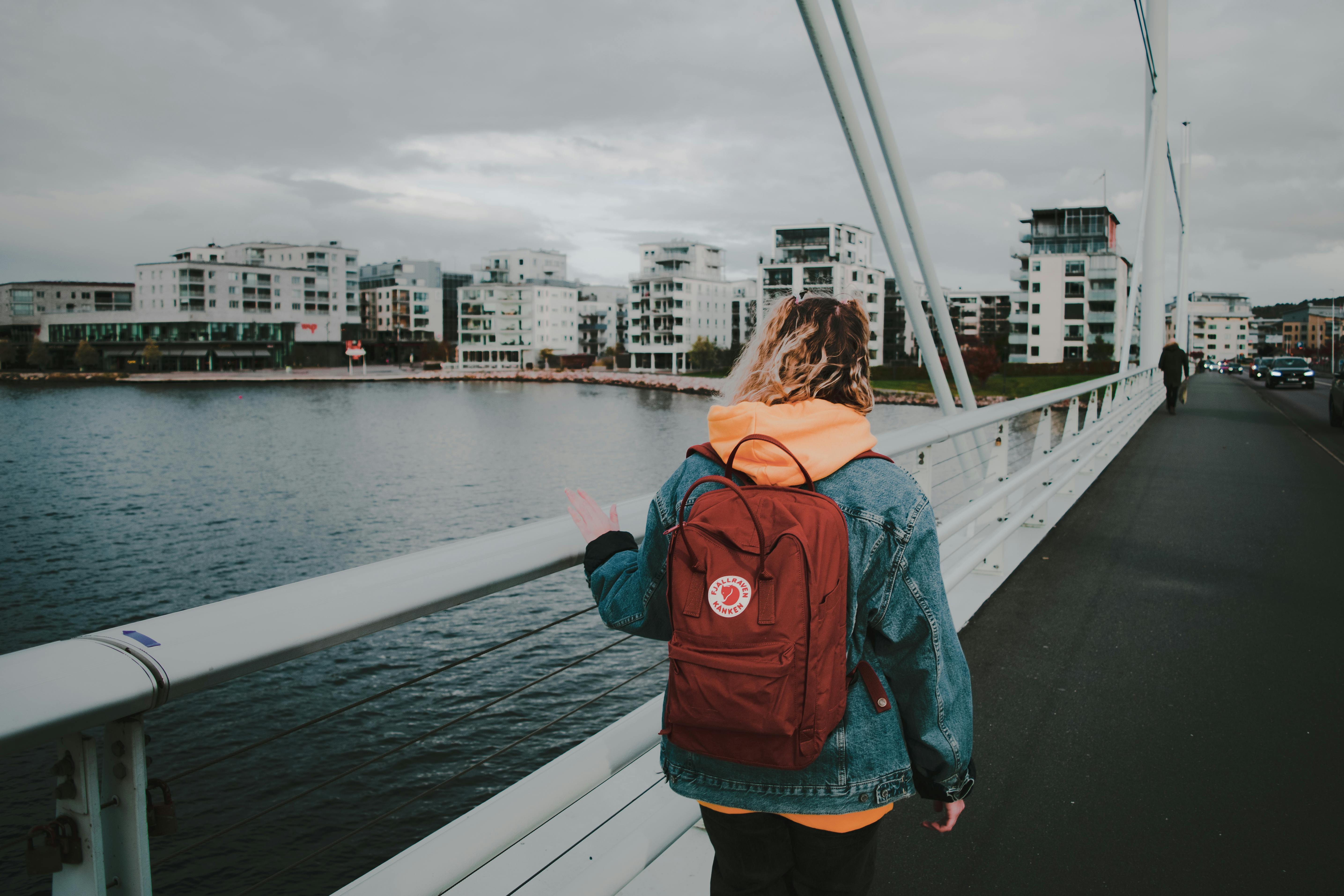
Sweden: A daily walk sounds ideal, but could do more harm than good – with frequent strolls causing a ‘mind darkening’ effect for those who travel on foot to work and those hanging around on corners with the mass unemployed.
Dr Linda Borgstrom (43) a physician with Disney+ in Stockholm said that familiar roads and alleyways can induce an unparalleled sense of repetition that weighs heavily on those with a fragile disposition. “Walking regularly along a street and then returning by the same route produces what cognitive specialists call spatial asphyxia, where the boredom can literally make you feel like you are doing the same thing over and over – possibly without end.”
Studies with rats have shown that they often go slightly mental in mazes constructed to replicate the mundanity of human existence. “The science is undisputed,” said Borgstrom. “Rats are not people.”
Other societal pressures exist, too, said the petite researcher. “The prospect of bumping into people you know can be exhausting. Constructing a new weather-related conversation with a neighbour can often be the opposite of life affirming – widely known as death affirming.”
Borgstrom recommends mixing it up. “It may be advisable to take public transport rather than walking wherever possible. Or consider working from home where you can take wellbeing breaks with your favourite streaming service, even if your employer has mandated against it or your work requires you to be physically present. After all, it’s better to lose a job than lose your health – or your very mind.”
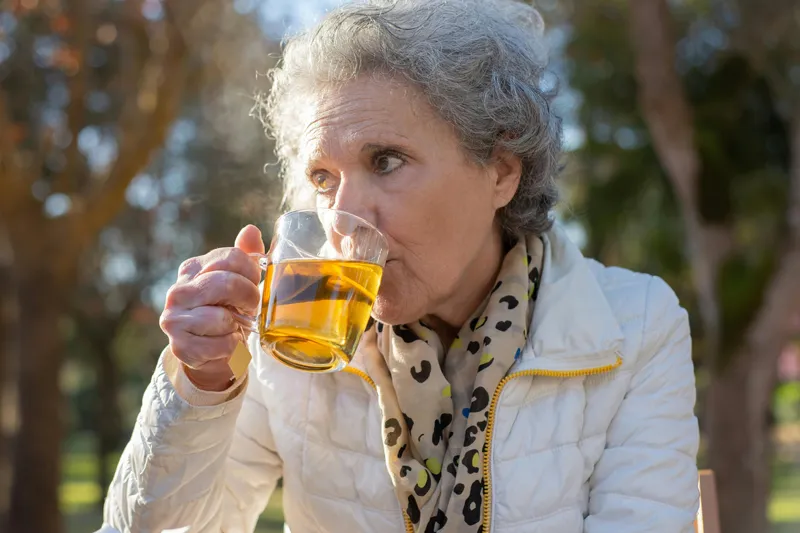
France: Health and fashion professionals are warming to the idea that pressure on the neck can be used to manage dementia – a mind-numbingly boring disease that eats away the thinking process very close by in the head.
France’s leading care home provider Clariane has teamed up with luxury goods cartel LVMH to produce a garment that applies force around the neck – and shows unruly patients who is boss. “Applying the correct pressure when they go off on one is incredibly empowering,” said Pierre Dupont from Clariane. “It brings calm to the ward, helps them snap out of it and reminds them they are not fighting the Germans, or more recently, the Bosnians or Taliban.”
LVMH’s creative director, Pierre Escoffier, is excited about the partnership, and the prospect of reinterpreting what many in the fashion industry have termed a ‘scarf’ or ‘cravat’. “This is about looks first, no? But if we can do some good by combining fashion with science, this is also good, no?”
Yet Dr Pierre Houllebecq from public health agency Santé Publique France is not thrilled that the dementia clad are being used as guinea pigs, or even larger quadrupeds. “These are people, not hogs to be tied up before being consumed with hollandaise sauce. Would you like your parent to trussed up like a bear or a rather large infant?” he asks philosophically.