
Health news they don't want you to know
Health news they don't want you to know
Health news they don't want you to know

Monaco: Wellness influencers have stumbled on a new way to help you feel empowered and alert – and like vaping, it works only by extracting more dubious goodness into your heaving lungs.
“Wild breathing could meaningfully immerse your multiple personas in nature,” said fauna practitioner and landscape agitator Pippa Windsor-Soup. “Breathing inside your country home or hacienda is hugely fulfilling, but imagine taking that emotion outdoors and letting it be free, and more importantly be felt as well as seen.”
Wild breathing was first popularised by historical figures such as polar explorer Ernest Shackleton and Superman in his man cave – but it was thought to be too cold to catch on. “Now thanks to the magic of global warming, we can encourage consumers to pay a little to gain a lot,” said Windsor-Soup, 17,413th in line to the UK’s throne, but still behind childcare disruptor Prince Andrew because she is a woman.
Yet a lot doesn’t come cheap. A starter pack, with AI generated tips and posh-voiced chatbot will cost most users around 10% of their annual salary – more for those prone to panic attacks who may gulp in outdoor air as if it were free.
Like many in her social class Windsor-Soup is dismissive of criticism. “As I say to my network, one small breath for man, one giant gasp for our coffers… that’s off the record by the way.”

Germany: Pecker pill producer Pfizer’s first foray into weight loss drugs hasn’t gone as well as they planned, as early tests reveal they have only managed to reduce the size of one part of the anatomy – a part that few women and not all men gladly access.
An observer working for a competitor commented, “As the world’s largest maker of Viagra, all Pfizer knows is the penis. They are obsessed, but that fixation hasn’t helped their new product – only giving a bunch of people swollen ankles and a meaner outlook.”
The trials were conducted at a secret mountain location in the German Alps, with patients fed a diet of enhanced muesli and sausage. Half were given the weight loss drug while the remainder were force-fed a concoction by the alternative rock band Placebo.
“For sure, it hasn’t gone as well as we expected,” said Pfizer spokesman Hermann Koch [his actual name]. “But on the positive side, they have all lost some weight, just not where they expected. We’re working hard to replace any faulty parts.”
The company may have some way to go to convince dieters their manhood is safe, however. Historians recall that even Pfizer’s name is derived from the old Germanic name for todger: “Pisser,” said Professor Hans Fraukorp from the University of Berlin.
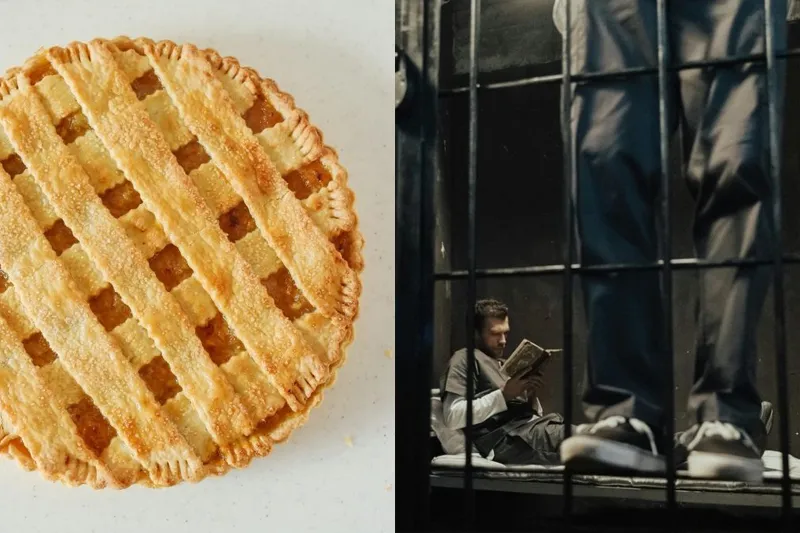
USA: A new weight-gain pill in the shape of a pie is aiming to reverse a human shrinking epidemic that is forcing more and more adults to shop in the children’s section – even without a legal youngster in their possession.
“Weight loss jabs are not for everyone, even when they come as candy coloured treats,” said Dr Dan Jildo from Mounjaro maker Eli Lilly. “So we have devised a new pill that reverses the impact of losing body mass – infused with an almost hypnotic buttery flavour.”
In partnership with the UK’s master baker Greggs, and in a desperate bid to diversify their portfolio, Dr Jildo and his team perfected the pill – which is around 120 times larger than a traditional tablet – after several murderers slipped through the bars in local correctional facilities, only to strike again. And this time they struck in a very mean-spirited way.
“While smaller adults bring many benefits to mankind, with cow meat going further in communities and more migrants fitting on boats, what’s wrong with embracing the good old days?” said Dr Jildo. “I remember a time when a cow would only feed two people and you only got four migrants in a dinghy rather than 63 – who in their right mind doesn’t want more of that?"
When asked about speculation that the pills are, in fact, only pies, Dr Jildo responded with “Umm yum yum yum” and other noises associated with snaffling down a mouth full of big pharma products.

Estonia: Backpain sufferers are being encouraged to try a new treatment to help cure their affliction and stop their moaning – with a welcome side-effect that will finally lead them to do some good in the community.
Dr Dolores Sepp, a chiropractor with the Confido Clinic in Tartu, is leading the mostly legal experiments. “Let’s face it, not everyone can navigate the outer workings of a stream with confidence. Especially those who were previously known in a derogatory fashion as dwarves and midgets but who now prefer to be called Inuits.”
The solution, in case the penny hasn’t clicked yet, is for a backpain sufferer to gain relief by lying across a stream to stretch their spine. This also forms a handy bridge with their backs and leg limbs serving as a transport hub. “The patient can then use a special whistle that only short people can hear to summon them, while also saying ‘It’s okay, our back has got you’,” said Dr Sepp. “Instead of: ‘We’ve got your back,’ it’s the other way round. Which is genius.”
One downside is that because a person’s back is mostly positioned to the rear of their body, you can’t see who is coming. “Bad tall people could take the piss by using the human bridge when they could easily leap the stream in a single bound. That happened in early trials. Spines were snapped and some people were drenched, but we’re working hard to minimise these risks with a stricter sign-up policy based on how many squares have a car or stalker in their image.”

France: Health and fashion professionals are warming to the idea that pressure on the neck can be used to manage dementia – a mind-numbingly boring disease that eats away the thinking process very close by in the head.
France’s leading care home provider Clariane has teamed up with luxury goods cartel LVMH to produce a garment that applies force around the neck – and shows unruly patients who is boss. “Applying the correct pressure when they go off on one is incredibly empowering,” said Pierre Dupont from Clariane. “It brings calm to the ward, helps them snap out of it and reminds them they are not fighting the Germans, or more recently, the Bosnians or Taliban.”
LVMH’s creative director, Pierre Escoffier, is excited about the partnership, and the prospect of reinterpreting what many in the fashion industry have termed a ‘scarf’ or ‘cravat’. “This is about looks first, no? But if we can do some good by combining fashion with science, this is also good, no?”
Yet Dr Pierre Houllebecq from public health agency Santé Publique France is not thrilled that the dementia clad are being used as guinea pigs, or even larger quadrupeds. “These are people, not hogs to be tied up before being consumed with hollandaise sauce. Would you like your parent to trussed up like a bear or a rather large infant?” he asks philosophically.